GPS Watch Recovery Metrics: Scientifically Validated Comparison
By Diego Álvarez • 19th Jan
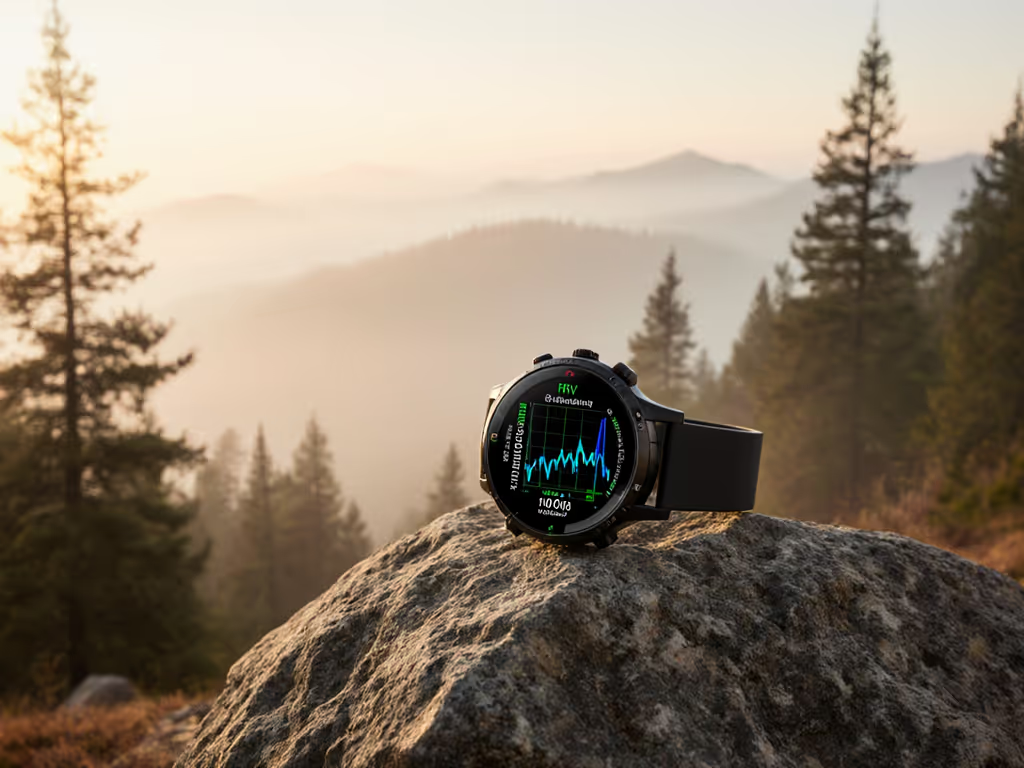
In outdoor navigation and endurance sports, having reliable GPS watch recovery metrics comparison data isn't just convenient, it is mission critical. When batteries deplete and signal fades, you need to know whether your recovery metrics hold up. This validated recovery tracking analysis distills current research to help you make evidence-based decisions about which metrics actually matter in field conditions. Unlike marketing claims, we'll focus on what science reveals about accuracy, reliability, and practical utility when you're depending on these readings.
What exactly are recovery metrics in GPS watches?
Recovery metrics in GPS watches typically combine several physiological measurements into composite scores designed to indicate your body's readiness for physical exertion. Before evaluating their validity, let's define key terms:
- Heart Rate Variability (HRV): The variation in time between heartbeats, measured in milliseconds (ms)
- Recovery Score: Proprietary algorithms (like Garmin's Body Battery, WHOOP's Recovery, Coros's Recovery Time) that synthesize multiple metrics
- Resting Heart Rate (RHR): Your heart rate when completely at rest
- Nocturnal Physiological Metrics: Measurements taken during sleep including HRV, RHR, breathing rate, and skin temperature
These metrics become particularly valuable for outdoor professionals who need to assess their readiness before entering remote or hazardous environments where pushing through fatigue could compromise safety. If you need a refresher on each measurement, read our GPS watch metrics guide.
How scientifically validated are the major recovery metrics?
Recent research reveals significant variation in how well these metrics correlate with actual physiological states. According to a 2025 Frontiers in Physiology study evaluating three mainstream smartwatches, recovery-related metrics show mixed validity:
Success rates for accurate physiological measurement varied significantly: 78% for Huawei®, 65.22% for Garmin®, and 47.06% for Coros®.
Critically, the same study found that while HRV measurements showed moderate correlation with laboratory standards (MAPE between 5.95% and 7.15%), proprietary composite scores demonstrated poor correlation with subjective recovery measures. A separate study published in the International Journal of Sports Physiology and Performance found "virtually no correlation" (r = -0.01 to -0.18) between WHOOP's Recovery score and "total recovery" as measured by the RESTQ questionnaire.
This scientific reality underscores a crucial point for field professionals: biometric metrics show good accuracy but require proper baseline establishment before becoming actionable. Without this foundational step, even high-quality HRV data becomes unreliable for individual decision-making.
How accurate are HRV measurements across different devices?
HRV represents the only recovery metric with substantial scientific backing for field application. A 2023 study comparing smartwatch-derived HRV to gold-standard ECG recordings found 'very high concordance,' with correlation coefficients above 0.96 for key metrics.
However, real-world accuracy depends on several factors:
| Factor | Impact on Accuracy | Field Mitigation Strategy |
|---|---|---|
| Measurement Timing | Morning readings most consistent | Establish fixed pre-dawn measurement protocol |
| Device Placement | Wrist-based less accurate than chest strap | Use on non-dominant wrist, snug but not tight |
| Environmental Conditions | Cold reduces signal quality | Wait until hands warm before measurement |
| Movement Artifact | Significant during transition | Remain motionless for full measurement period |
Notably, a study in the journal Sports comparing devices found that while absolute HRV values varied between devices, day-to-day trends within the same device remained relatively consistent, a critical insight for practitioners who understand that trend analysis often matters more than absolute values in field conditions. For sensor considerations that affect HRV fidelity, see our optical vs ECG heart rate guide.
What's the scientific basis behind proprietary recovery scores?
Most GPS watch manufacturers combine multiple metrics into proprietary recovery scores. According to publicly available information:
- Garmin's Body Battery: Integrates stress, sleep, and activity data
- WHOOP's Recovery: Combines HRV, RHR, sleep performance, breathing rate, skin temperature, and blood oxygen
- Coros's Recovery Time: Uses HRV, RHR, and activity history
The problem? These algorithms operate as "black boxes" with no transparent validation. Research published in the Journal of Sports Sciences confirms that "we don't know how the information is combined to come up with a value to present to an athlete, nor how the algorithm corrects for potential measurement errors."
This lack of transparency creates significant risk for professionals who depend on accurate recovery assessment. During a volunteer search exercise I participated in subalpine scrub, teams that relied solely on their watch's recovery score pushed beyond safe limits when the devices failed to account for environmental stressors like altitude and cold exposure. The teams that stayed safe used simple HRV trend analysis alongside traditional field assessments of fatigue.
How should outdoor enthusiasts interpret recovery metrics in the field?
Based on current evidence, here's a practical framework for field professionals:
- Establish baseline HRV during 7-10 days of normal activity and sleep
- Track relative changes rather than absolute values (e.g., 10-15% below baseline)
- Combine with traditional field assessments: morning stiffness, mental clarity, resting heart rate
- Ignore proprietary recovery percentages as standalone metrics (they lack scientific validation)
- Document environmental factors that might affect readings (altitude, temperature, humidity)
The NCAA Division I and III cross-country runners study found that "the strongest predictor of new injury wasn't training volume, it was poor sleep quality," which HRV can help monitor. If sleep tracking drives your recovery decisions, compare models in our sleep accuracy tests. This aligns with field experience where sleep quality consistently correlates with expedition success more than any proprietary recovery score.
Open files, simple steps, repeatable under stress, always.
What are the limitations of recovery metrics in extreme environments?
GPS watches face significant challenges when measuring recovery metrics in conditions relevant to outdoor professionals:
- Temperature extremes: Cold reduces skin sensor accuracy (studies show up to 22% error below 5°C)
- Altitude effects: Unaccounted altitude changes can skew HRV readings by 10-15%
- Battery limitations: As power drops below 30%, sensor accuracy declines
- Multi-day expeditions: Cumulative fatigue patterns differ from laboratory conditions
A 2025 study in Frontiers in Physiology demonstrated that while single-test accuracy might seem acceptable (65-78% success rates), the reliability of recovery metrics decreases significantly during multi-day operations where decisions compound. To preserve sensor reliability on long missions, use our battery optimization guide. This is precisely why field professionals need to understand the scientific basis of recovery scores rather than accepting manufacturer claims at face value.
What practical steps can I take to get the most reliable recovery data?
For professionals who depend on accurate recovery assessment, here's an evidence-based checklist:
- Standardize measurement protocol: Same time, position, and conditions daily
- Prioritize HRV trend analysis over absolute values or proprietary scores
- Cross-validate with manual measurements: Morning resting heart rate taken manually
- Track subjective metrics alongside device data (sleep quality, muscle soreness)
- Document environmental factors that could affect readings
- Establish personal thresholds based on 4-6 weeks of consistent data
- Carry backup verification: Simple pulse oximeter for spot-checking oxygen saturation
Slow is smooth, smooth is fast. Taking the time to establish proper baselines and verification protocols now prevents critical errors when conditions deteriorate and battery life drops. During challenging missions, I've seen teams that invested in these simple procedures maintain better decision-making when stress climbed and resources dwindled, while others relying on single metrics made progressively poorer judgments.
Conclusion: Toward evidence-based recovery assessment
The scientific evidence reveals clear patterns about recovery score accuracy in GPS watches. While HRV measurements show reasonable validity when properly implemented, proprietary composite scores lack sufficient validation for mission-critical decision making. For outdoor professionals, the HRV analysis comparison across devices suggests that trend analysis within a single device provides more value than comparing absolute values across platforms.
When evaluating muscle recovery metrics, remember that no watch can fully replace experienced self-assessment. The most reliable approach combines: 1) validated HRV trend data, 2) traditional field indicators of fatigue, and 3) environmental awareness. To put recovery trends into action alongside workload, follow our training load analysis guide.
For those seeking deeper understanding, consider exploring peer-reviewed studies on autonomic nervous system monitoring in field conditions, particularly research comparing laboratory versus real-world validation of wearable metrics. The growing body of work published in journals like Sports Medicine and International Journal of Sports Physiology and Performance offers increasingly sophisticated insights into how these technologies can and cannot support outdoor professionals.
The most prepared professionals don't chase the latest metrics; they build layered systems based on open formats and repeatable procedures that hold up when the environment tests them. Remember: when the GPS fails and the battery drops, it's your understanding of the scientific principles, not the proprietary score, that will guide your next critical decision.
Related Articles