GPS Watch Desert Performance: Beat Heat & Dust Reliably
By Nadia Okafor • 17th Dec
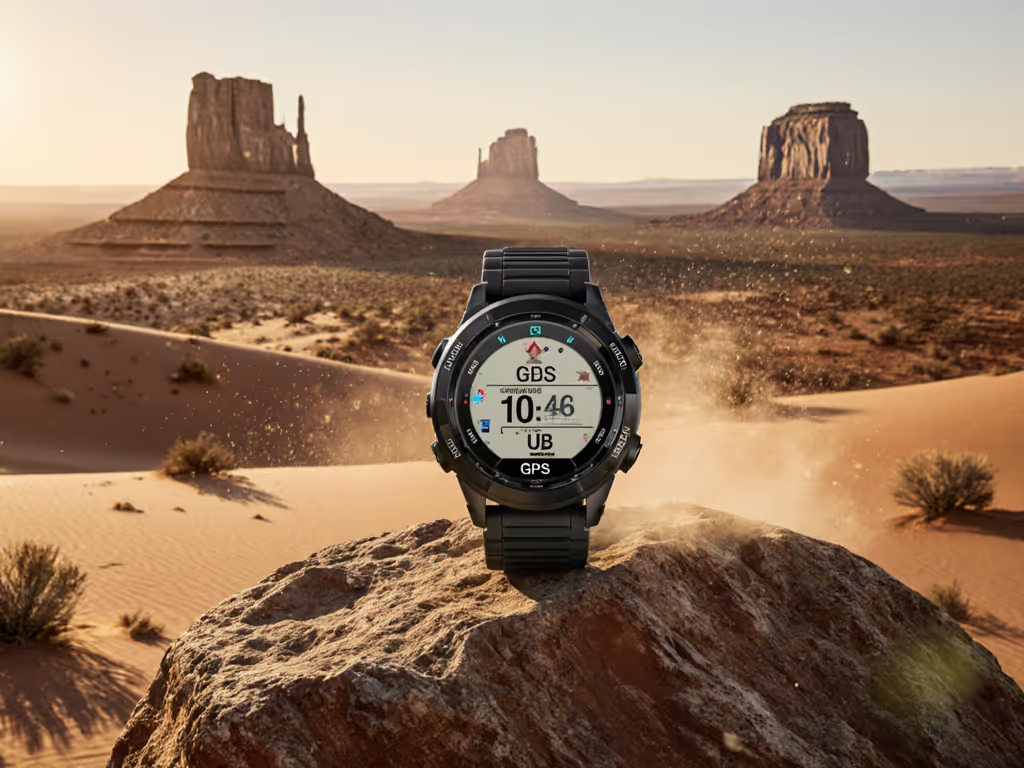
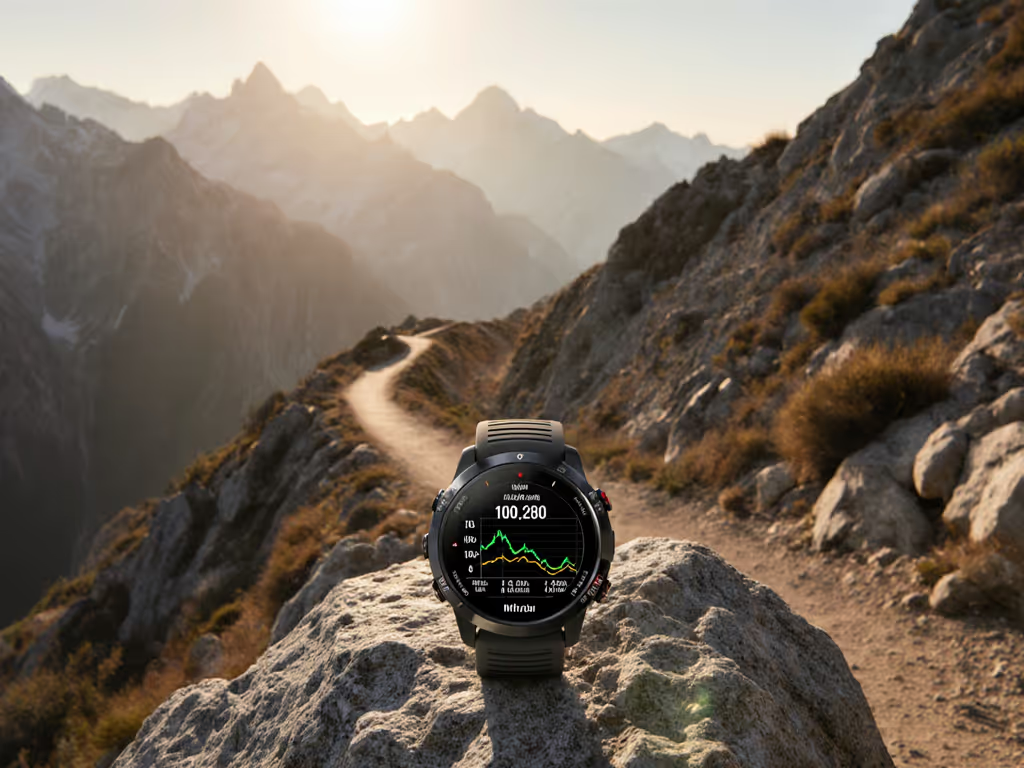
When your survival hinges on a watch that won't quit in 120°F heat and sandstorms, GPS watch desert performance isn't just a spec sheet entry, it's mission-critical. Extreme heat GPS reliability separates tools that get you home from liabilities that strand you. Forget lab-tested battery claims; in the desert, thermal runaway and sensor drift turn 'all-day runtime' into a half-day gamble. I've seen teams waste hours backtracking after a $500 watch glitched in a slot canyon, its GPS misreading rock walls as open terrain. Ownership means control; buy tools you can keep using and moving (especially when the charger back at base is a day's hike away). Let's dissect what actually works where failure isn't an option.
How Does Heat Actually Wreck GPS Watch Battery Life?
Most manufacturers advertise GPS battery life at 25°C (77°F). But desert temps routinely exceed 45°C (113°F), a threshold where lithium-ion chemistry falters. At 50°C, battery discharge accelerates by 30-40% even if the watch is idle, per thermal stress studies from the IEEE Power Electronics Society. Why? Heat increases internal resistance, forcing the battery to work harder just to maintain voltage. In continuous GPS mode, this means a claimed '20-hour runtime' collapses to 12-14 hours. Worse, thermal throttling kicks in: the watch may auto-disable dual-frequency GPS to cool down, sacrificing desert navigation accuracy for survival. High temperature battery life demands engineering most skip:
- MIL-STD-810H thermal testing (not just IP68), proving operation at 71°C internal temps
- Thermal buffer zones (air gaps between battery and metal casing to slow heat transfer)
- Conservative discharge limits (e.g., stopping at 15% charge instead of 5% to prevent cell damage)
Don't trust marketing fluff. Demand third-party thermal soak test data. For field-proven ways to stretch runtime in extreme conditions, see our GPS watch battery optimization guide. If a brand won't publish battery drain curves at 50°C, assume their '40-hour GPS' spec is irrelevant for desert use.
Why Your Display Vanishes in Direct Sunlight (And How to Fix It)
Glare isn't a nuisance in the desert, it's a safety hazard. Standard LCDs and AMOLEDs wash out when ambient light exceeds 30,000 lux (typical desert noon: 100,000+ lux). Sunlight readable display performance hinges on three factors:
- Peak brightness (≥1,000 nits minimum; 2,000+ ideal for sandy terrain reflectivity)
- Anti-reflective coatings (multi-layer AR beats single-layer)
- Display tech (memory-in-pixel LCDs like Garmin's Power Glass maintain readability at lower power)
Most watches fail test #3. They max out brightness only during menu navigation, then dim to conserve battery, leaving you squinting at a blank screen mid-hike. Verify if the watch maintains max brightness during GPS navigation. If bright-screen readability is a priority, compare GPS watches for cycling tested for sunlight visibility. One field-tested trick: set the watch face to a high-contrast monochrome mode. It slashes power draw by 25% while boosting visibility. Remember: if you're digging for sunglasses every 10 minutes, the watch isn't fit for purpose.
Dust Protection: It's Not Just About IP Ratings
IP68 means nothing when monsoonal dust infiltrates seams over weeks. Dust protection GPS watch standards require more than 'waterproofing plus extra'. True desert resilience means:
- Sealed button mechanisms with tapered O-rings (not flat gaskets)
- Zero crevices: bezel-to-glass gaps under 0.1 mm to prevent sand wedging
- Charging port covers rated for 1,000+ cycles (proprietary magnetic ports degrade fastest)
The critical flaw? Most watches omit ingress testing for fine particulates (≤75 µm). A single grain of quartz sand can jam a button or scratch a lens. Look for MIL-STD-810H Method 510.7 'Sand and Dust' validation, where watches endure 6 hours in blowing sand at 18 m/s winds. If reviews mention 'sticky buttons after dune hiking', walk away. Service-life estimates for desert units without this certification rarely exceed 18 months. Also weigh long-term repairability across brands to ensure you can replace worn buttons, lenses, and ports after sand exposure.
Can You Trust Navigation in Featureless Terrain?
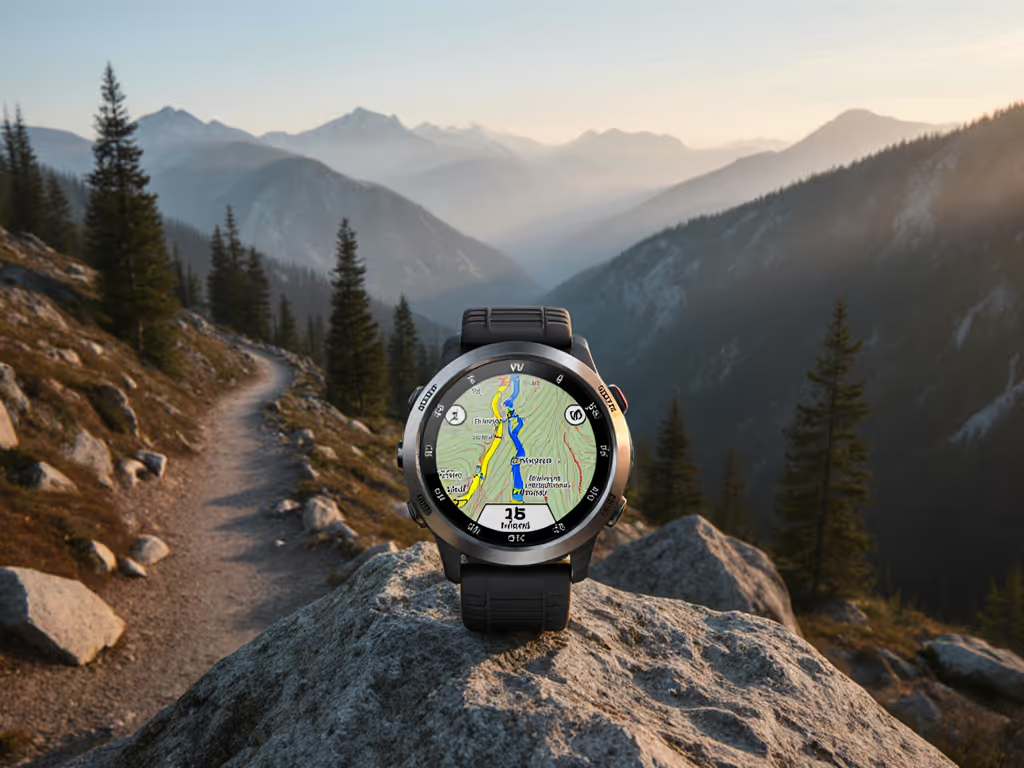
Deserts kill GPS accuracy through two silent killers: multipath errors (signals bouncing off rock walls or sand dunes) and ionospheric distortion (heat waves bending satellite signals). Standard GPS drifts 5-10 m in open desert, enough to miss a hidden water source. For why dual-frequency and multi-constellation tracking cut that drift, see our multi-band GPS guide. Desert navigation accuracy requires:
- Multi-band GNSS (L1+L5/L1+L2) to correct atmospheric distortion
- Dead reckoning with barometer + compass during signal dropouts
- On-device Snap-to-Route (e.g., matching tracks to known trails)
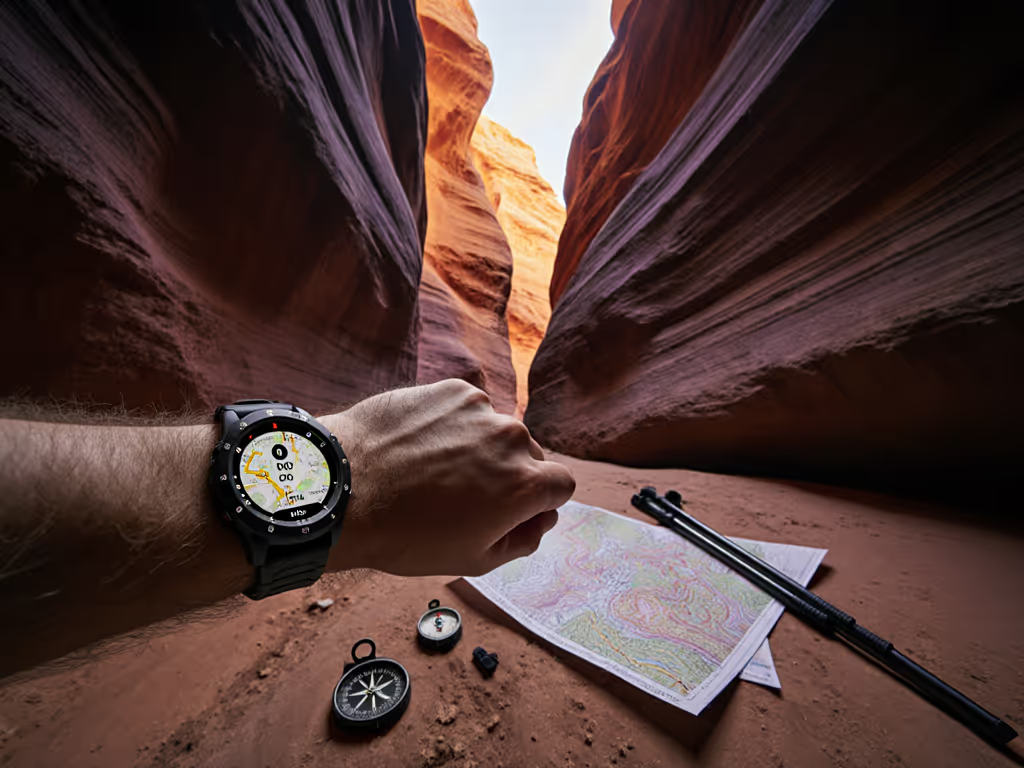
Testing reveals stark differences. In Utah's Coyote Buttes (minimal tree cover but complex rock formations), single-band watches showed 12% track deviation versus 3.5% for multi-band models. Crucially, recovery time after canyon pauses matters more than raw accuracy. One team I advised nearly missed a resupply point because their watch took 2+ minutes to reacquire satellites after exiting a slot canyon, time they didn't have with fading light. Clear thresholds: if a watch doesn't relock within 90 seconds post-pause in rocky terrain, reject it.
Final Verdict: Own Your Tools, Don't Rent Them from a Logo
Desert reliability isn't bought, it's engineered into thermal margins, serviceable parts, and open data policies. When a watch fails at 110°F, it's not 'extreme conditions', it's the product operating outside its actual design limits. Demand these non-negotiables:
- Thermal discharge curves validated at 50°C (not just 25°C)
- MIL-STD-810H dust/sand certification
- Minimum 1,200-nit display with sustained GPS-mode brightness
- Multi-band GNSS with sub-5 m real-world accuracy in rocky terrain
- Repairable charging port (no glued-in cables)
- Full GPX export without app subscriptions
That field team's two-day delay? Avoided now by prioritizing replaceable parts and open standards. Renting reliability is still rentin, and in the desert, delayed shipments cost more than money. Choose watches with 5+ year support windows and community repair guides. Not sure which brands actually deliver that? Review our software support cycle breakdown. Your life isn't a beta test.
Own your tools; don't rent them from a logo.
Related Articles